I received in the mail Couleurs café by Marie Hardy-Séguette. So the year will begin once again with the presentation of a book.
Couleurs café by Marie Hardy-Seguette

I received in the mail Couleurs café by Marie Hardy-Séguette. So the year will begin once again with the presentation of a book.
How emerged colorism ? I look at the ability to sign and the property, which amounts to a broader discussion of economic and cultural capital; finally, to conclude the series, I offer a brief reflection on the long-term impact of colorism.

So today I'm talking about a new book Parcours contrastés des abolitionnistes Cyrille Bissette et Victor Schoelcher by Léo Ursulet, which recounts the parallel paths of the two important figures in the anti-slavery struggle in France in the first half of the 19th century.

Today, I share with you my questions and my investigation on the "slave market" of the Mouillage in Saint-Pierre of Martinique.

Today, I am gathering the elements of the life of Baptiste, an enslaved infirm "old negro" in 1833, who was formerly an apothecary.

I received (autographed moreover!) Bordeaux Métisse, Esclaves et Affranchis du XVIIIe à L'Empire by Julie Duprat. Today, I begin the year 2022, as I ended the previous one: with the presentation of a book!
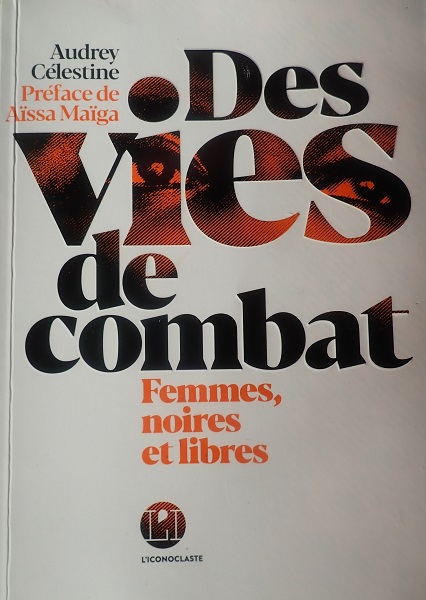
I found a little gem. I'm talking to you today about Des vies de combat — Femmes, noires et libres [Lives of Struggle - Women, Black and Free] by associate professor Audrey Celestine.

Today, I present you the database "Minutes notariales de Saint-Pierre", a new resource very useful for researchers and full of perspectives for genealogy.

Today, I wanted to share a singular story about the Domaine de La Pagerie: the trial in June 1806 of Émilie, enslaved, for attempted poisoning of his mistress.

Today, I suggest you read Gisèle Pineau's Frencn novelMes quatre femmes between historical memory, genealogy and literature.

100 words for a life: portrait of Vayaboury, my ancestor from India.

Today, I would like to share with you some excerpts from archives that touched me, as glimpses into the lives of free people of colour and the weight of colour prejudice for them.

Today, I'm going to talk to you about the various measures taken against free people of colour who coerced them in their daily lives.
Today, the first episode of a series on prejudice of color; I explain the concept of racist system.

Today, I want to talk briefly about a blacksmith shop in the city of Fort-de-France in the 1830s and the enslaved urban blacksmiths who worked there.

Today, I talk to you about the legal prejudice of colour, but above all about its removal; because with it, it is my subject of study that disappears from official documents!

Today, I am talking about Behanzin, King of Dahomey, who lived in forced exile in Fort-de-France in Martinique for 12 years.

Today, I am talking to you about Behanzin, king of Dahomey, so feared that he was exiled to Fort-de-France in Martinique for 12 years.

Today, I am talking to you about the words chabin, chabine, which, in our vocabulary in the Antilles, refers to a person who as very light complexion, but whose phenotypic features are reminiscent of a African person.

The JEP2019 were the opportunity to discover the Fort-de-France dry dock, an essential reception area for the construction, maintenance and repair of ships, it is now classified as a historical monument.

A reading of the slave registry by the African ancestral tradition... a book to reconstruct a genealogy with slave ancestors and rebuild the link with Africa.

I have had some exciting fictional readings and I want to share one of them with you. Today I am talking about literature with the novel Kindred by Octavia Butler.

Today, I will talk to you about strategies that people of colour have put in place to keep free and enslaved members of the same family united despite the legal constraints of the slavery and colonial system.

"The Sea Maroons", a poetic expression for sometimes tragic destinies: those of men and women who fled slavery by taking the path of water. Today, I am talking to you about maroonage and in particular the French book Les Marrons de la mer, escapes of slaves from Martinique to the Caribbean islands (1833-1848).
 Tan Listwa