Today, I'm going to talk to you about French board games to get to know our Caribbean better!
French Board Games on Caribbean #2

Today, I'm going to talk to you about French board games to get to know our Caribbean better!

Today, I wanted to share a singular story about the Domaine de La Pagerie: the trial in June 1806 of Émilie, enslaved, for attempted poisoning of his mistress.

Today, I suggest you read Gisèle Pineau's Frencn novelMes quatre femmes between historical memory, genealogy and literature.

Today, I would like to share with you some excerpts from archives that touched me, as glimpses into the lives of free people of colour and the weight of colour prejudice for them.

Today I continue the study of the prejudice of colour with the measures seeking to control the development of the group of Free People of Colour and those that segregated and discriminated against them.

Today, I'm going to talk to you about the various measures taken against free people of colour who coerced them in their daily lives.

Today, I would like to talk about the construction of the prejudice of colour from a legal point of view, by focusing on the emergence of the free people of colour as a legal group and by contextualizing the legal expression of the prejudice in relation to the society of order in the Kingdom of France.
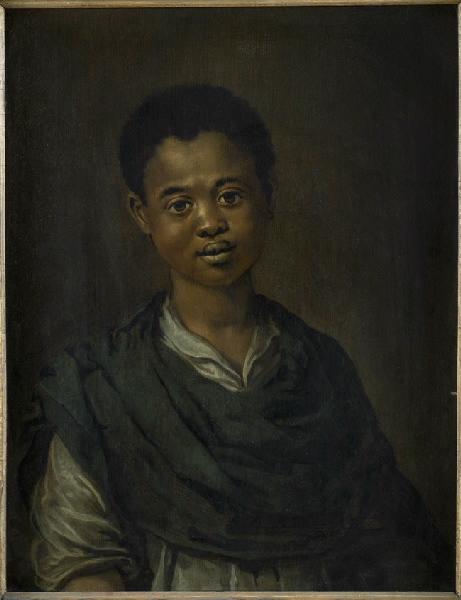
Today I am talking about the image of the Black man, because it has fed not only social attitudes, but also legislative decisions, constituting colour prejudice, at the highest levels of the state.
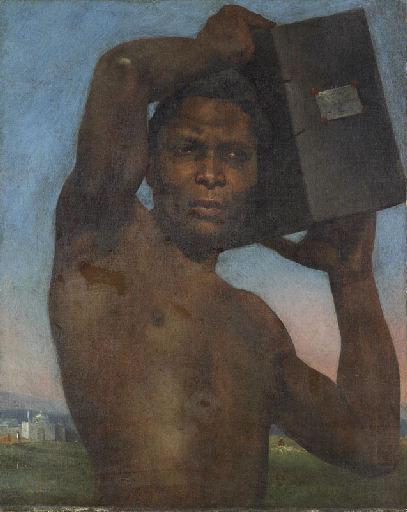
Today, the first episode of a series on prejudice of color; I explain the concept of racist system.

Today, I want to talk briefly about a blacksmith shop in the city of Fort-de-France in the 1830s and the enslaved urban blacksmiths who worked there.

Today, I am talking about the enslaved apothecaries, assistant surgeons and nurses who helped care for the sick at the Fort-Royal hospital, a paramedical activity that was not very common in the colonial and slave-owning society of the 18th century.

Today, I will continue the history of the Fort-Royal Hospital and tell you in detail about the men and women, enslaved, who served the sick at the end of the 18th century.
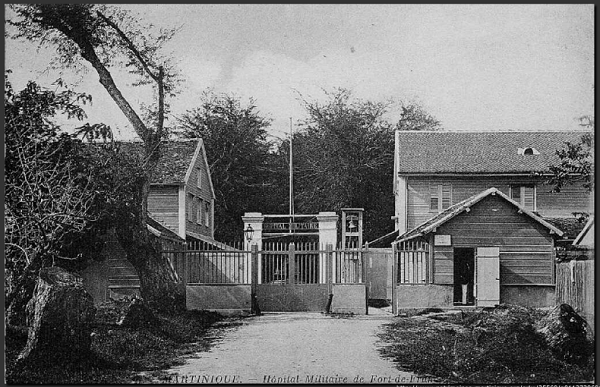
Today, I am speaking to you about the military hospital of Fort-de-France, its project at the end of the 17th century and its laborious construction in the 18th century.

today, I'm talking to you about comics and French nugget: Péyi an nou, which tells the story of Bumidom and the movement of thousands of French Caribbean people to hexagonal France between 1963 and 1982..

Today, I talk to you about the legal prejudice of colour, but above all about its removal; because with it, it is my subject of study that disappears from official documents!

Today, I am talking about Behanzin, King of Dahomey, who lived in forced exile in Fort-de-France in Martinique for 12 years.

Today, I am talking to you about Behanzin, king of Dahomey, so feared that he was exiled to Fort-de-France in Martinique for 12 years.

Today, I am talking to you about the words chabin, chabine, which, in our vocabulary in the Antilles, refers to a person who as very light complexion, but whose phenotypic features are reminiscent of a African person.

The exhibition Caribbean Ties, Connected People, then and now is circulating in the Caribbean and is to be discovered in Martinique at this time.

For once, I'm talking about the background of the profession and an ambitious project of Manioc.org that was very close to my heart: a database "Slavery in Martinique".

A reading of the slave registry by the African ancestral tradition... a book to reconstruct a genealogy with slave ancestors and rebuild the link with Africa.
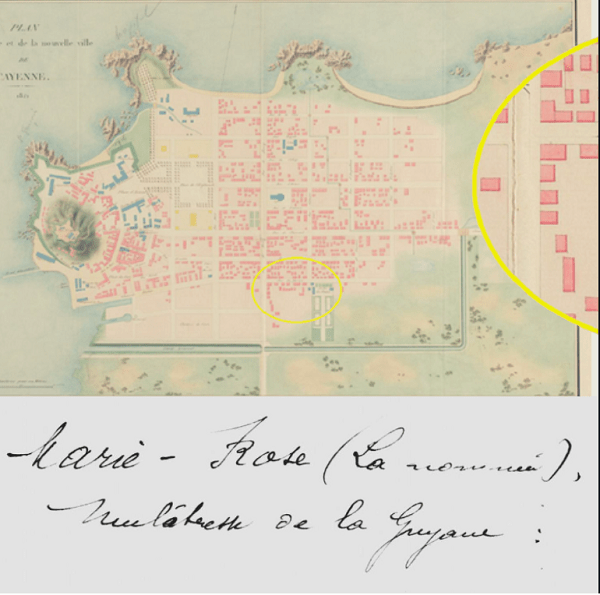
Two different sources that evoked the same colored woman in Cayenne? That was enough for me to wonder who was that charitable woman who had marked these men. Today, I am continuing the portrait of Marie-Rose or the social rise of a woman of colour in French Guiana in the 18th century.

Two different sources that evoked the same colored woman in Cayenne? That was enough for me to wonder who was that charitable woman who had marked these men. Today, I paint a portrait of Marie-Rose, a rich French Guyanese and a benefactor for the deportees, but not only!

Do you know of any other eruptive events in Mount Pelée than those of the 20th century? Today, I am listing the eruptions of Mount Pelee that have occurred during a period of human settlement on the island, for about 4500 years.
 Tan Listwa